---
title: "Art of Teaching NGSS: Phenomena & Culture Impact Student Engagement"
description: What's the value-add of time-on-learning? Discover how next generation science classes take phenomena & a culture of intellectual risk-taking.
image: https://www.knowatom.com/hubfs/Imported_Blog_Media/curriculum_img-May-29-2024-08-03-06-7494-AM.jpg
---
[](https://cta-redirect.hubspot.com/cta/redirect/347944/f56bee57-133e-4975-8055-799f1f23588b)
[Teacher Login](https://app.knowatom.com/signin)
[](https://www.knowatom.com/)
x
[KnowAtom Feed](https://www.knowatom.com/blog/rss.xml)
# The “Art of Teaching NGSS”: How Phenomena and a Culture of Learning Impact Student Engagement
Written by [Francis Vigeant ](https://www.knowatom.com/teaching-phenomena/author/francis-vigeant) | Jun 11, 2019 |
[Learning Methods](https://www.knowatom.com/teaching-phenomena/topic/learning-methods)
Art of Teaching NGSS: Phenomena & Culture Impact Student Engagement
3:20
Not too long ago a reader of this blog posed the following question:
**My question is how do you get kids to want to even ask questions? I teach high school and the only way most of my students learn anything is by my forcing it down their throats, because they aren't even curious about phenomena. This new model is awesome for kids who WANT to learn, but for the vast majority, school is where their parents want them to go so they aren't home all day. Any thoughts?**
It got me thinking because it strikes at the very heart of teaching and learning: What is the value-add of time on learning today?
The art of teaching is partly match-making. The "perfect match" is where students encounter phenomena first-hand that engages their curiosity at a gut level and makes them want to learn more. The key to making this work is that both the encounter and the reason to engage need to be owned by the student. Most traditional teachers rely on a show-and-tell model where a computer program, book, or demonstration/video shows students phenomena and then the teacher proceeds to tell them about it and why they should care. However, this is not how students' brains are structured to learn; in fact it fights their very biology.
A student needs to believe something is important in order to begin processing it. This is why a next-generation model of inquiry instruction isn't about devices, eBooks, simulations, etc., but instead is about learning to think as a skill. This is why all of the Next Generation Science Standards (performance expectations) occur in the context of phenomena and have a science and engineering practices dimension.
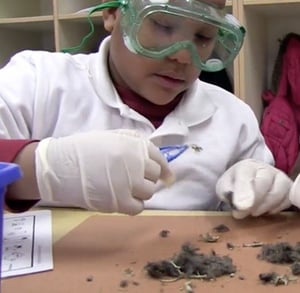
Once students believe something is important, they will have authentic questions about the phenomena, providing a platform for [inquiry -- to answer students’ own questions](https://www.knowatom.com/teaching-phenomena/the-student-inquiry-experience). But for students to want to ask their questions, they need to feel that their questions are respected and taken seriously by everyone [peers and teachers]. This is an issue of culture, both teaching and learning, that a teacher can influence. No one wants to look or feel stupid for asking a question, especially a teenager. Cracking jokes, allowing students to snicker at other students, or comments from adults like "we talked about that" or "you should already know that" are major barriers to building a culture of intellectual risk-taking. Remember: middle school and high school students will opt out of asking questions as a way of opting out of potential personal embarrassment.
This blog post provides 7 ways to set expectations for an effective, productive classroom dialogue: [7 Expectations You Should Set for a Genuine Socratic Dialogue](https://www.knowatom.com/teaching-phenomena/7-expectations-you-should-set-for-a-genuine-socratic-dialogue).
Here is another blog post that talks through how the layout of your classroom can help to facilitate a scientific discourse in which students learn the expectations of asking questions and analyzing what they think and why they think it: [How to Get Students to Participate in Socratic Dialogue](https://www.knowatom.com/teaching-phenomena/how-to-get-students-to-participate-in-socratic-dialogue).
You may also find the eBook “[How to Develop a Culture for Success with the Next Generation Science Standards](https://www.knowatom.com/how-to-develop-a-culture-for-success-with-the-next-generation-science-standards)” and the webinar “[Asking better questions: The key to deeper, more engaged, more authentic science instruction](https://www.knowatom.com/asking-better-questions-webinar)” on our free [resource library](https://www.knowatom.com/resources) helpful.
[ ](https://www.knowatom.com/teaching-phenomena/author/francis-vigeant)
## [Francis Vigeant](https://www.knowatom.com/teaching-phenomena/author/francis-vigeant)
“Growing up, I wanted to be an inventor, solving problems that would help people have better lives. Every day at KnowAtom is an opportunity to invent solutions that give thousands of students and teachers a better experience doing science, engineering, technology, and math (STEM). Providing educators with professional satisfaction and students with the opportunity to understand the world we live in is my way of helping people have better lives.”
##### Sign Up for Our Blog
[](https://cta-redirect.hubspot.com/cta/redirect/347944/17a9319a-99ba-4386-9769-efb3e8bfcd3e)
### Posts by Topic
- [Teaching Tools & Strategies (72)](https://www.knowatom.com/teaching-phenomena/tag/teaching-tools-strategies)
- [Next Generation Science Standards (63)](https://www.knowatom.com/teaching-phenomena/tag/next-generation-science-standards)
- [Learning Methods (46)](https://www.knowatom.com/teaching-phenomena/tag/learning-methods)
- [STEM / STEAM (41)](https://www.knowatom.com/teaching-phenomena/tag/stem-steam)
- [Leadership (30)](https://www.knowatom.com/teaching-phenomena/tag/leadership)
- [Curriculum (23)](https://www.knowatom.com/teaching-phenomena/tag/curriculum)
- [State Standards (13)](https://www.knowatom.com/teaching-phenomena/tag/state-standards)
- [School Administration (11)](https://www.knowatom.com/teaching-phenomena/tag/school-administration)
- [Testing (11)](https://www.knowatom.com/teaching-phenomena/tag/testing)
- [Professional Development (8)](https://www.knowatom.com/teaching-phenomena/tag/professional-development)
- [Socratic dialogue (1)](https://www.knowatom.com/teaching-phenomena/tag/socratic-dialogue)
- [socracircle+ (1)](https://www.knowatom.com/teaching-phenomena/tag/socracircle)
[see all](https://www.knowatom.com/teaching-phenomena/the-art-of-teaching-how-phenomena-and-a-culture-of-learning-impact-student-engagement#)
Related Posts
- [ Innovation in EdTech AI: SocraCircle+ and the](https://www.knowatom.com/teaching-phenomena/socracircle-and-the-power-of-human-connection)
- [ Cultures and Thinking in Action - Mindset 7:](https://www.knowatom.com/teaching-phenomena/learning-occurs-at-the-point-of-challenge)
- [ Learning and Thinking Are as Much a Collective](https://www.knowatom.com/teaching-phenomena/learning-and-thinking-as-a-collective-enterprise-mindset-6)
- [ Cultures of Thinking in Action Mindset 5:](https://www.knowatom.com/teaching-phenomena/learning-is-a-consequence-of-thinking-mindset-5)
- [ Cultures of Thinking in Action - Mindset 4:](https://www.knowatom.com/teaching-phenomena/students-learn-best-when-known-valued-respected-by-all-mindset-4)

Quick Links
Resources
Sign Up for Our Blog
### Sign Up for Our Blog
Connect with Us
-
-
-
-
© 2026 KnowAtom LLC • 10 Brady Drive Unit 3 • Ipswich MA • 01938 USA
[DO NOT SELL MY PERSONAL INFORMATION](https://www.knowatom.com/do-not-sell-my-personal-information) | [Privacy Policy](https://www.knowatom.com/privacy-policy) | [Terms of Use](https://www.knowatom.com/terms-of-use)
```json
{
"@context" : "https://schema.org",
"@type" : "BlogPosting",
"author" : {
"@type" : "Person",
"name" : "Francis Vigeant",
"url" : "https://www.knowatom.com/teaching-phenomena/author/francis-vigeant"
},
"dateModified" : "2025-05-14T16:08:59.820Z",
"datePublished" : "2019-06-11T04:00:00.000Z",
"headline" : "Art of Teaching NGSS: Phenomena & Culture Impact Student Engagement",
"image" : [ "https://www.knowatom.com/hubfs/Imported_Blog_Media/curriculum_img-May-29-2024-08-03-06-7494-AM.jpg" ],
"mainEntityOfPage" : {
"@id" : "https://www.knowatom.com/teaching-phenomena/the-art-of-teaching-how-phenomena-and-a-culture-of-learning-impact-student-engagement",
"@type" : "WebPage"
},
"publisher" : {
"@type" : "Organization",
"logo" : {
"@type" : "ImageObject",
"url" : "https://www.knowatom.com/hubfs/images/KnowAtom%20Logo.svg"
},
"name" : "KnowAtom, LLC"
}
}
```
```json
{
"@context" : "http://schema.org",
"@type" : "Organization",
"address" : {
"@type" : "PostalAddress",
"addressCountry" : "USA",
"addressLocality" : "Salem",
"addressRegion" : "MA",
"postalCode" : "01970",
"streetAddress" : "27 Congress Suite 410"
},
"alternateName" : "KA",
"areaServed" : {
"@type" : "GeoCircle",
"geoMidpoint" : {
"@type" : "GeoCoordinates",
"latitude" : "+42.5182274",
"longitude" : "-70.8877569"
},
"geoRadius" : "150 km"
},
"description" : "Next Generation Science STEM Curriculum",
"email" : "fvigeant@knowatom.com",
"image" : "https://www.knowatom.com/hubfs/KA-GSD.png",
"logo" : "https://www.knowatom.com/hubfs/Knowatom-2017/Image/logo-1.png",
"mainEntityOfPage" : {
"@id" : "https://www.knowatom.com/teaching-phenomena/the-art-of-teaching-how-phenomena-and-a-culture-of-learning-impact-student-engagement",
"@type" : "WebPage",
"description" : "What's the value-add of time-on-learning? Discover how next generation science classes take phenomena & a culture of intellectual risk-taking."
},
"name" : "KnowAtom",
"sameAs" : [ "https://www.facebook.com/KnowAtom", "https://twitter.com/KnowAtom", "https://www.youtube.com/channel/UCS0rbN0RfqaU1xaISrdVpTA", "https://plus.google.com/110709105138117096940" ],
"telephone" : "(617) 475-3475",
"url" : "https://www.knowatom.com"
}
```