

Science Lesson: Understanding Manufacturing Processes
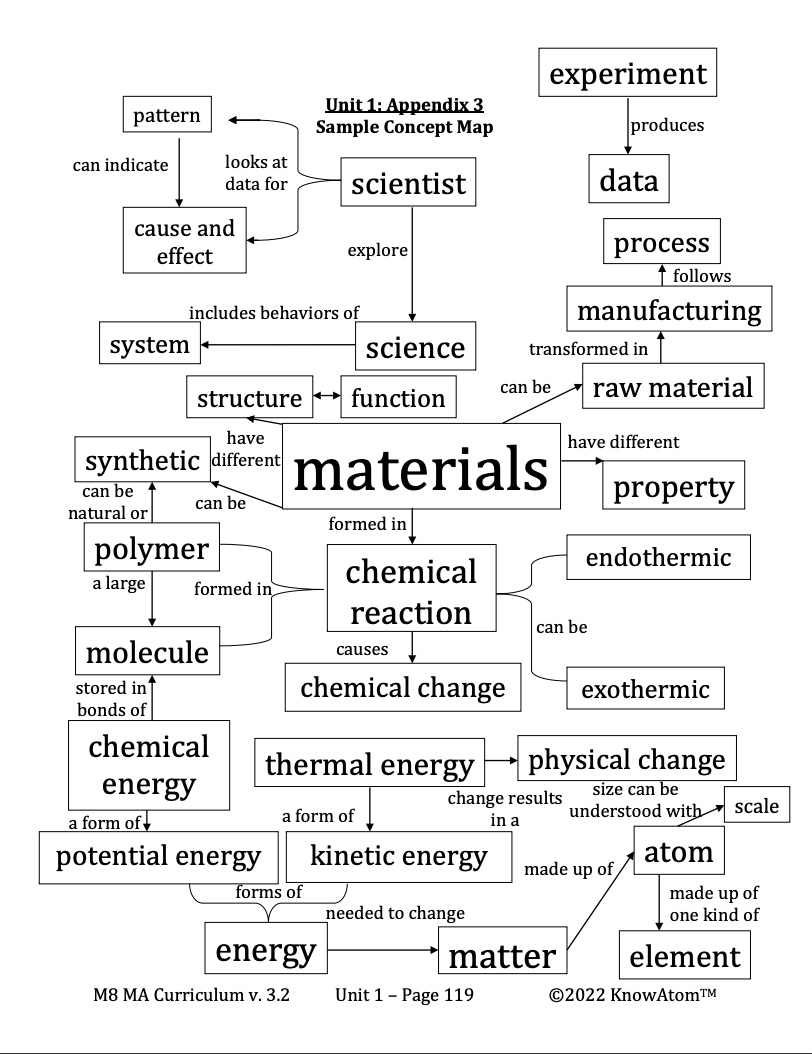
Students connect what they know about chemical reactions and the matter that makes up materials to how materials come together to form finished products through manufacturing. They model a basic manufacturing process to create plastic keychains for a factory, and then make improvements to the manufacturing process to decrease waste and improve efficiency and output.
Science Big Ideas
- Manufacturing builds on scientific knowledge about the relationship between matter’s structure and its properties. Manufacturing is an operation that transforms raw materials—the basic materials from which a product is made—into a finished product.
- Process is an important part of manufacturing because a process is any series of steps designed to meet a goal. Manufacturers need to follow set processes because they want to make sure that the goods they produce meet certain design and safety standards.
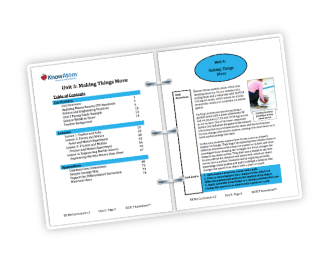
Discover Complete Hands-on Screens-off Core Science Curriculum for K-8 Classrooms
Prepared hands-on materials, full year grade-specific curriculum, and personalized live professional development designed to support mastery of current state science standards.
Science Essential Questions
- Why is manufacturing important in today’s society?
- Why is it important to know about the properties of different materials in manufacturing?
- Why is it important to follow a set process that is sequential?
- Why does the forming step come when it does in the process?
- What is the relationship between forming and extrusion?
- Why is extrusion an example of a physical, not a chemical, process?
- What is the role of quality control in a manufacturing process?
Common Science Misconceptions
 Misconception: Manufacturing is old-fashioned and doesn’t address current societal needs.
 Fact: Manufacturing plays an important role in the development of the majority of products we use in our everyday lives.
Science Vocabulary
Manufacturing : the operation of transforming raw materials into a finished product
Raw material : a basic material from which a product is made
Lexile(R) Certified Non-Fiction Science Reading (Excerpt)
Making Crayons
Twice a week, trains with cars full of paraffin wax pull up to the Crayola factory in Pennsylvania. Paraffin wax is a material that is made up of between 20 and 40 atoms of carbon, as well as hydrogen atoms. It is a white, odorless, tasteless, waxy, pliable solid.
That paraffin wax is the main ingredient of crayons. Paraffin wax is a raw material because it is a basic material from which a product is made. Before you can buy crayons at the store and use them, the materials that make them up have to be processed. This operation of transforming raw materials into a finished product is called manufacturing. Manufacturing is what builds all of the “stuff” that surrounds you, from the nails and screws that hold your desk together to your cell phone, your clothes, and your car. Understanding the basic atomic structure of paraffin wax and its resulting properties is an important first step in manufacturing crayons. Nylon is another raw material that can be used in many different applications, including toothbrushes, women’s stockings and other clothing, carpets, hoses, parachutes, racket strings, and dental floss.
Process is very important in manufacturing. Remember that a process is any series of steps designed to meet a goal. For example, the scientific process is designed to help scientists meet the goal of answering a question. Manufacturing processes refer to the series of steps designed to transform raw materials into a finished product. Different industries follow different processes, depending on the product being made. However, all manufacturing processes involve two basic goals. First, the materials have to be formed into the desired shape. Secondly, their properties have to be changed or improved to better achieve the desired function.
When the trains reach Crayola’s factory in Pennsylvania, the wax is heated until it melts. Here, it’s important to know about more of paraffin wax’s properties, including its melting point. Crayons melt at 40 degrees Celsius (104 degrees Fahrenheit).
Then, the wax is mixed together with color pigments, which are like colored flour. For this step again, scientists need to know the properties of paraffin wax and how it interacts with other materials. Paraffin wax doesn’t mix with liquids, so the color pigments need to be in solid (powder) form.
The wax is also mixed with other chemicals, which the company doesn’t reveal. These ingredients give crayons the specific properties that they have.
Crayon Molds
Once the color pigments are mixed with the wax and stirred so that the color is evenly distributed throughout, the hot wax mixture is poured into molding machines. A mold is a hollow container that is filled with a liquid or a pliable material such as the heated wax or plastic. A single Crayola mold makes 1,200 crayons at a time. Cold water travels through tubes in the molds to cool the wax down. When the material cools, it hardens in the shape of the mold. This manufacturing process is often called forming. In forming, the shape of the material is changed into a specified form.
In about four to seven minutes, the wax in the mold cools and becomes solid. Workers scrape off the top of the mold, and the extra wax will be melted and used again. The mold then extrudes the crayons. Extrusion refers to a manufacturing process in which a material is put into a chamber and pressed out through a hole (also called a die). Extrusion is an example of a physical process because it doesn’t change the chemical structure of the material. Other physical processes include cutting and sanding.
Some processes are chemical because they change the chemical structure of a material. For example, some kinds of plastic are heated to make them more rigid. Nylon is cooled to make it more elastic.
After they have been extruded, each crayon is inspected for breaks and chips, as well for bubbles, which can appear if mixing has not been complete. Those crayons that are rejected will be re-melted and molded. This process is called quality control. It is a process that reviews the fitness of production by comparing items produced to a production standard. This process includes product inspection, where someone examines the final product for unacceptable defects, such as cracks.
Hands-on Science Activity
In this lesson, students model a basic manufacturing process to create plastic keychains for a factory, and then make improvements to the manufacturing process to decrease waste and improve efficiency and output.
Science Assessments
KnowAtom incorporates formative and summative assessments designed to make students thinking visible for deeper student-centered learning.
- Vocabulary Check
- Lab Checkpoints
- Concept Check Assessment
- Concept Map Assessment
- And More...
See How KnowAtom Aligns to NGSS Science Standards
Discover hands-on screens-off core science curriculum for student centered K-8 classrooms. KnowAtom supports classrooms with all hands-on materials, curriculum, and professional development to support mastery of the standards.
