---
title: Traditional Versus Next Generation Models of Instruction
description: Does traditional science and engineering focus on developing student's knowledge and experience? Where do students learn to problem solve?
image: https://www.knowatom.com/hubfs/Imported_Blog_Media/5e%205-677738-edited-May-29-2024-07-53-27-9843-AM.png
---
[](https://cta-redirect.hubspot.com/cta/redirect/347944/f56bee57-133e-4975-8055-799f1f23588b)
[Teacher Login](https://app.knowatom.com/signin)
[](https://www.knowatom.com/)
x
[KnowAtom Feed](https://www.knowatom.com/blog/rss.xml)
# Traditional Versus Next Generation Models of Instruction
Written by [Francis Vigeant ](https://www.knowatom.com/teaching-phenomena/author/francis-vigeant) | May 17, 2017 |
[Learning Methods](https://www.knowatom.com/teaching-phenomena/topic/learning-methods)
Traditional Versus Next Generation Models of Instruction
4:46
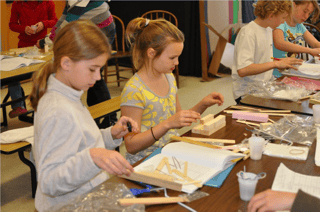
The Next Generation Science Standards require a complete rethinking of how teachers and students interact in the classroom because they call for students to develop their higher order thinking skills of creating, evaluating, and analyzing.
To understand this, it is helpful to use two contrasting models of classroom instruction: a traditional model and a [next generation model](https://www.knowatom.com/teaching-phenomena/what-is-the-5e-instructional-model).
In a traditional model of instruction, content flows to a teacher, who acts as a content specialist: explaining, demonstrating, and modeling for students to watch and listen. A student is expected to take all of that content and be able to repeat it, summarize it, or show it back to the teacher. If what the teacher has given matches what the student has given, that's proficiency.”
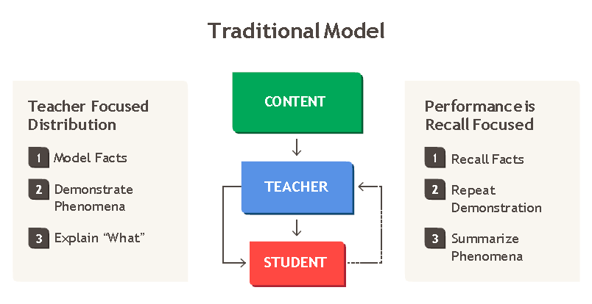
*In the traditional model of science instruction, the teacher is the gatekeeper standing between students and the content. Their role in this scenario is to model facts, demonstrate phenomena and explain to students what’s going on. For their part, students are expected to recall the facts, repeat demonstrations and summarize what they see.*
The issue with this is that the model involves no *experience*. There's no problem solving involved. It's really just recall, which is lower order thinking. If we look at Bloom’s Taxonomy, these expectations of students require only the skills of remembering, understanding, and applying.
**Higher Order Thinking**
Because of the inclusion of science and engineering practices in NGSS, the emphasis on lower-order thinking completely flips in a next generation science classroom. The Next Generation Science Standards are really looking for students to be able to create, evaluate, and analyze simultaneously. Achieving this requires a different model of science instruction—the next generation model.
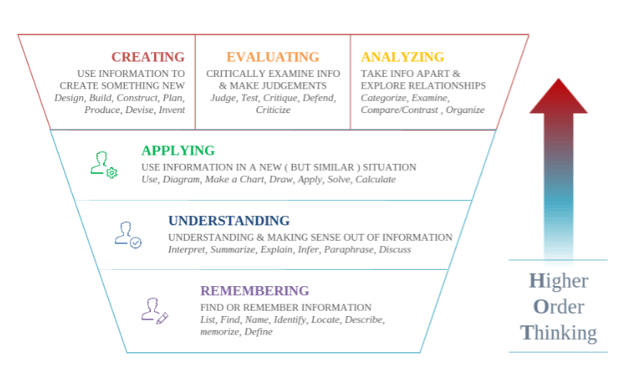
*The revised Bloom’s Taxonomy moves away from the traditional pyramid. While remembering, understanding and applying still form the base, creating, evaluating and analyzing now share the top position, because all must be used simultaneously in an effective science classroom.*
We still need the lower order thinking skills in the next generation model. If students are creating, evaluating, and analyzing simultaneously, they have to remember what they know. Because they have to try to make sense out of that information, they have to try to understand or extend their understanding. They must also try to apply it as they're analyzing, evaluating, and creating. There's a feedback loop that happens.
Unfortunately, that’s not something that exists in the traditional model. If there is no real challenge involved other than remembering, then there's no opportunity to develop a skill.
Rigor is where [challenge *exceeds* skill](https://www.knowatom.com/teaching-phenomena/creating-an-environment-where-challenge-exceeds-skill). The rigor in the traditional science classroom involves memorization. Under [NGSS](https://www.knowatom.com/teaching-phenomena/the-nature-of-science-and-engineering-under-ngss), however, the rigor is connected to creating, evaluating, and analyzing problems and questions by using skills and developing the content knowledge that students possess. That's the challenge for the classroom, to be an environment that offers experience and opportunity to engage content and skills simultaneously.
**Enter the Next Generation Model**
In this environment, the teacher is no longer the sage on the stage.” Instead, they are a skillful coach, trying to strengthen the connection between students and the skills and content. They're trying to curate an environment in which student skills are nurtured, the supports for those skills are dynamic and changing over time, and there is a full release of responsibility from early on in the year.
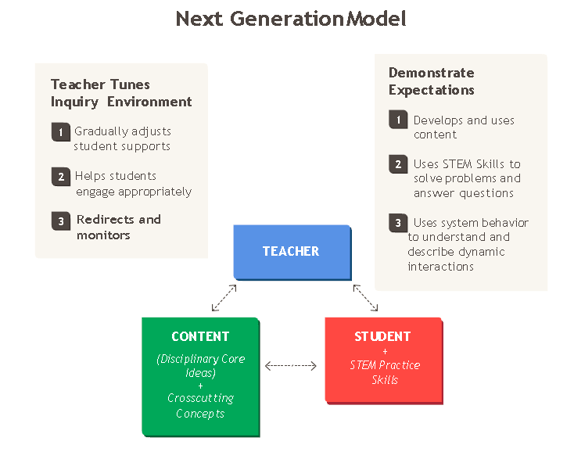
*The next generation model significantly changes the relationship of all parties, from students to teachers to the content and crosscutting concepts themselves. Here, the teacher tunes the inquiry environment with gradual adjustments, helping students engage appropriately, and readjusting and monitoring where necessary. Students have firsthand contact with the content, developing and using it, using their STEM skills to solve problems or answer questions, and employing systems behavior to inform their efforts.*
In the next generation model, the teacher is engaging, redirecting, and monitoring students, and the expectations of a student in this environment are different. The emphasis is not on recall but on developing and using the content to step into the roles of scientists and engineers, to engage in risk taking and problem solving, and to explain through investigative phenomena.
Therefore, NGSS place the emphasis in the classroom on higher order thinking skills and on students acting as scientists and engineers in the classroom on an everyday basis.
[ ](https://www.knowatom.com/teaching-phenomena/author/francis-vigeant)
## [Francis Vigeant](https://www.knowatom.com/teaching-phenomena/author/francis-vigeant)
“Growing up, I wanted to be an inventor, solving problems that would help people have better lives. Every day at KnowAtom is an opportunity to invent solutions that give thousands of students and teachers a better experience doing science, engineering, technology, and math (STEM). Providing educators with professional satisfaction and students with the opportunity to understand the world we live in is my way of helping people have better lives.”
##### Sign Up for Our Blog
[](https://cta-redirect.hubspot.com/cta/redirect/347944/17a9319a-99ba-4386-9769-efb3e8bfcd3e)
### Posts by Topic
- [Teaching Tools & Strategies (72)](https://www.knowatom.com/teaching-phenomena/tag/teaching-tools-strategies)
- [Next Generation Science Standards (63)](https://www.knowatom.com/teaching-phenomena/tag/next-generation-science-standards)
- [Learning Methods (46)](https://www.knowatom.com/teaching-phenomena/tag/learning-methods)
- [STEM / STEAM (41)](https://www.knowatom.com/teaching-phenomena/tag/stem-steam)
- [Leadership (30)](https://www.knowatom.com/teaching-phenomena/tag/leadership)
- [Curriculum (23)](https://www.knowatom.com/teaching-phenomena/tag/curriculum)
- [State Standards (13)](https://www.knowatom.com/teaching-phenomena/tag/state-standards)
- [School Administration (11)](https://www.knowatom.com/teaching-phenomena/tag/school-administration)
- [Testing (11)](https://www.knowatom.com/teaching-phenomena/tag/testing)
- [Professional Development (8)](https://www.knowatom.com/teaching-phenomena/tag/professional-development)
- [Socratic dialogue (1)](https://www.knowatom.com/teaching-phenomena/tag/socratic-dialogue)
- [socracircle+ (1)](https://www.knowatom.com/teaching-phenomena/tag/socracircle)
[see all](https://www.knowatom.com/teaching-phenomena/traditional-versus-next-generation-models-of-instruction#)
Related Posts
- [ Innovation in EdTech AI: SocraCircle+ and the](https://www.knowatom.com/teaching-phenomena/socracircle-and-the-power-of-human-connection)
- [ Cultures and Thinking in Action - Mindset 7:](https://www.knowatom.com/teaching-phenomena/learning-occurs-at-the-point-of-challenge)
- [ Learning and Thinking Are as Much a Collective](https://www.knowatom.com/teaching-phenomena/learning-and-thinking-as-a-collective-enterprise-mindset-6)
- [ Cultures of Thinking in Action Mindset 5:](https://www.knowatom.com/teaching-phenomena/learning-is-a-consequence-of-thinking-mindset-5)
- [ Cultures of Thinking in Action - Mindset 4:](https://www.knowatom.com/teaching-phenomena/students-learn-best-when-known-valued-respected-by-all-mindset-4)

Quick Links
Resources
Sign Up for Our Blog
### Sign Up for Our Blog
Connect with Us
-
-
-
-
© 2026 KnowAtom LLC • 10 Brady Drive Unit 3 • Ipswich MA • 01938 USA
[DO NOT SELL MY PERSONAL INFORMATION](https://www.knowatom.com/do-not-sell-my-personal-information) | [Privacy Policy](https://www.knowatom.com/privacy-policy) | [Terms of Use](https://www.knowatom.com/terms-of-use)
```json
{
"@context" : "https://schema.org",
"@type" : "BlogPosting",
"author" : {
"@type" : "Person",
"name" : "Francis Vigeant",
"url" : "https://www.knowatom.com/teaching-phenomena/author/francis-vigeant"
},
"dateModified" : "2025-05-14T19:11:59.865Z",
"datePublished" : "2017-05-17T04:00:00.000Z",
"headline" : "Traditional Versus Next Generation Models of Instruction",
"image" : [ "https://www.knowatom.com/hubfs/Imported_Blog_Media/5e%205-677738-edited-May-29-2024-07-53-27-9843-AM.png" ],
"mainEntityOfPage" : {
"@id" : "https://www.knowatom.com/teaching-phenomena/traditional-versus-next-generation-models-of-instruction",
"@type" : "WebPage"
},
"publisher" : {
"@type" : "Organization",
"logo" : {
"@type" : "ImageObject",
"url" : "https://www.knowatom.com/hubfs/images/KnowAtom%20Logo.svg"
},
"name" : "KnowAtom, LLC"
}
}
```
```json
{
"@context" : "http://schema.org",
"@type" : "Organization",
"address" : {
"@type" : "PostalAddress",
"addressCountry" : "USA",
"addressLocality" : "Salem",
"addressRegion" : "MA",
"postalCode" : "01970",
"streetAddress" : "27 Congress Suite 410"
},
"alternateName" : "KA",
"areaServed" : {
"@type" : "GeoCircle",
"geoMidpoint" : {
"@type" : "GeoCoordinates",
"latitude" : "+42.5182274",
"longitude" : "-70.8877569"
},
"geoRadius" : "150 km"
},
"description" : "Next Generation Science STEM Curriculum",
"email" : "fvigeant@knowatom.com",
"image" : "https://www.knowatom.com/hubfs/KA-GSD.png",
"logo" : "https://www.knowatom.com/hubfs/Knowatom-2017/Image/logo-1.png",
"mainEntityOfPage" : {
"@id" : "https://www.knowatom.com/teaching-phenomena/traditional-versus-next-generation-models-of-instruction",
"@type" : "WebPage",
"description" : "Does traditional science and engineering focus on developing student's knowledge and experience? Where do students learn to problem solve?"
},
"name" : "KnowAtom",
"sameAs" : [ "https://www.facebook.com/KnowAtom", "https://twitter.com/KnowAtom", "https://www.youtube.com/channel/UCS0rbN0RfqaU1xaISrdVpTA", "https://plus.google.com/110709105138117096940" ],
"telephone" : "(617) 475-3475",
"url" : "https://www.knowatom.com"
}
```