FAQs
Frequently asked questions by KnowAtom clients:
1. What is necessary to implement the KnowAtom Curriculum?
2. Does KnowAtom align with state and national science standards?
3. How does KnowAtom curriculum teach all of the standards each year?
4. How does KnowAtom handle learning disabilities?
5. How does KnowAtom compare to other hands-on science curricula?
6. Do students use familiar materials in real-life settings?
7. Do students have the opportunity to encounter natural phenomena through firsthand experiences?
8. How does KnowAtom promote process mastery?
9. How do students learn to communicate scientifically?
10. How does KnowAtom make active science meaningful?
11. How does KnowAtom gather evidence that students learn the intended content?
12. How do you balance questioning in the classroom?
13. Do students get opportunities to collaborate, and consider other opinion’s, questions, and conceptions?”
Q: What is necessary to implement the KnowAtom curriculum?
The KnowAtom curriculum can be implemented like any other new curriculum your district has chosen. We recommend a minimum of one professional development session prior to using the curriculum in classrooms.
Q: Does KnowAtom align with state and national science standards?
Yes, the KnowAtom curriculum is designed to specifically address state-specific science, technology, and engineering standards. In addition, it incorporates the current National Research Council recommendations for Next Generation Science Standards and Common Core standards.
Q: How does KnowAtom Curriculum teach all of the standards each year?
KnowAtom curriculum focuses on mastery of defined unit goals within each content strand so that the curriculum uniquely steps standards unit to unit while maintaining vertical and horizontal alignment grade level to grade level. This methodology is consistent with current NRC recommendations that STEM instruction take a broader approach to concepts.
Q: How does KnowAtom handle learning disabilities?
KnowAtom offers materials for Socratic dialogue, hands-on inquiry, and firsthand data collection. These tools provide an opportunity for teachers to differentiate instruction, so all students are accessing the highest quality curriculum and succeeding in STEM. There have been many instances in mainstream classrooms where KnowAtom’s full-inquiry environment has allowed students to transcend their disabilities.
Our program is unique as it offers access to scientific content through multiple modalities including auditory, kinesthetic, text, and graphics. Through the use of engaging hands-on projects and visual aids, special educators are given numerous tools to help students visualize, contextualize, and engage scientific concepts.
Q: How does KnowAtom compare to other hands-on science curricula?
At KnowAtom we view science as living, breathing knowledge that impacts our everyday lives. We have designed our curriculum to reflect scientific topics, from cells and climate change to heredity, which students will expand upon as they advance across the curriculum. In addition, we expose students to technology popular among citizen scientists. This gives students a diverse firsthand science experience that uses real-world tools. Students who use the KnowAtom curriculum learn science, engineering, and technology concepts in context and are expected to use scientific vocabulary to apply their knowledge as they progress.
The KnowAtom STEM system is unique, because it focuses on scientific processes as the foundation of all inquiry-based activities. It also combines all of the standards with the complete materials teachers need to carry out hands-on experiments and engineering challenges.
Q: Do students use familiar materials in real-life settings?
For students to understand the connection between what they use every day and what a scientist or engineer may use, it is important to mix familiar and unfamiliar materials. By design, KnowAtom incorporates both familiar materials like cups , toothpicks, and light bulbs; and, unfamiliar materials like multimeters, diffraction grating, and microwells.
Q: Do students have the opportunity to encounter natural phenomena through firsthand experiences?
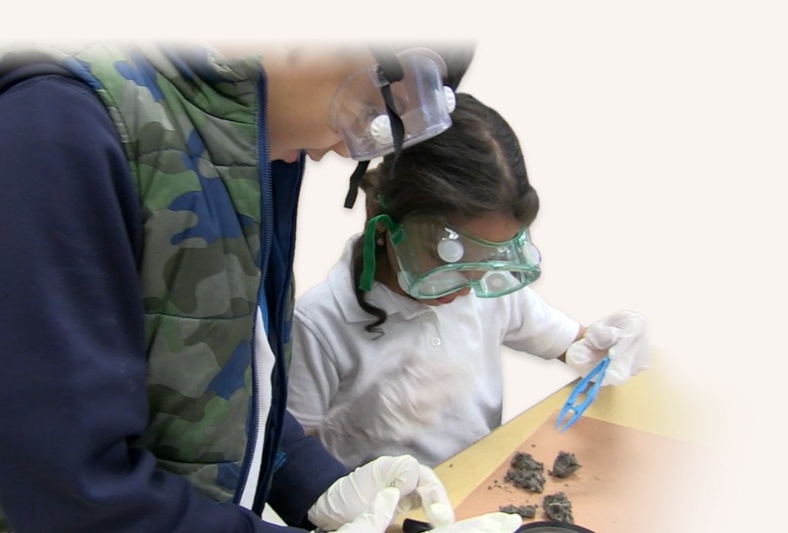
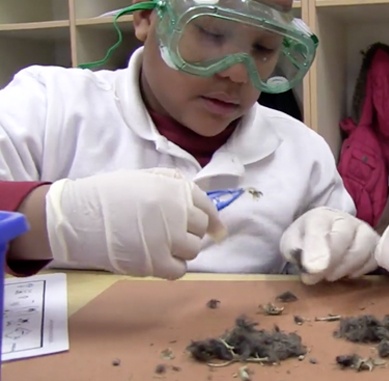
By design, KnowAtom’s curriculum integrates multiple tools to give students the opportunity to encounter natural phenomena firsthand. In addition, each activity is designed to allow students to directly gather data firsthand– whether it is a model windmill, a parallel/series circuit, or a skyscraper. Each student can conduct a firsthand investigation of specific scientific questions through their team’s hypothesis, procedure, and data. This creates a personal connection with processes and content.
Q: How does KnowAtom promote process mastery?
KnowAtom uses a well-defined model for the Engineering Design Process (EDP) and Scientific Method (SM). This model is practiced in weekly labs that students develop in their authentic science lab notebooks. We teach logical EDP and SM steps that transition students into scientist and engineer roles. Students use these logical steps weekly as a foundation for conducting all full-inquiry experiments and prototypes. These processes develop the analytical thinking and writing skills that enable students to actively solve problems in diverse contexts without extensive prior knowledge..
Q:How do students learn to communicate scientifically?
In each lesson students learn to communicate scientifically in various mediums. Students learn good oral communication practices through dialogue in class discussions, and with their lab partner to determine the focus and method of their experiment. Students learn to communicate in writing, as they collect their data firsthand in data tables and communicate their analysis to their lab partner, teacher, and class through written evidence-based conclusions. Written conclusions are present in both the science and engineering lab structures, and they require students to restate their hypotheses or proposed solutions and make an evidence-based claim of whether the hypothesis was true, false, or inconclusive using key data they collected as explicit evidence to support the claim.
Q: How does KnowAtom make active science meaningful?
Students find science more meaningful when they own the process and investigation. With a consistent, logical methodology and purposeful, planned experiments that are outlined in lab notebooks, students learn to independently expand their learning. The introduction of regular, authentic, firsthand experiments and prototypes makes science interesting for students and gives them an opportunity to practice and refine their contextual understanding of process skills.
Q: How does KnowAtom gather evidence that students learn the intended content?
Science lab notebooks act as a summative and formative assessment. Full concept assessments and student check-ins are also included with each unit.
Q: How do you balance questioning in the classroom?
Questions come from the students and are posed student-to-student within lab partnerships. During the initial Socratic Dialog, the teacher starts the questioning process as an activator and to network concepts lesson-to-lesson. Students raise open questions during this time that other students volunteer to answer in the open forum. Commonly in transition to lab development students are released with the responsibility to develop a scientific question they will investigate within the context of the unit.
Q: Do students get opportunities to collaborate, and consider other opinions, questions and conceptions?
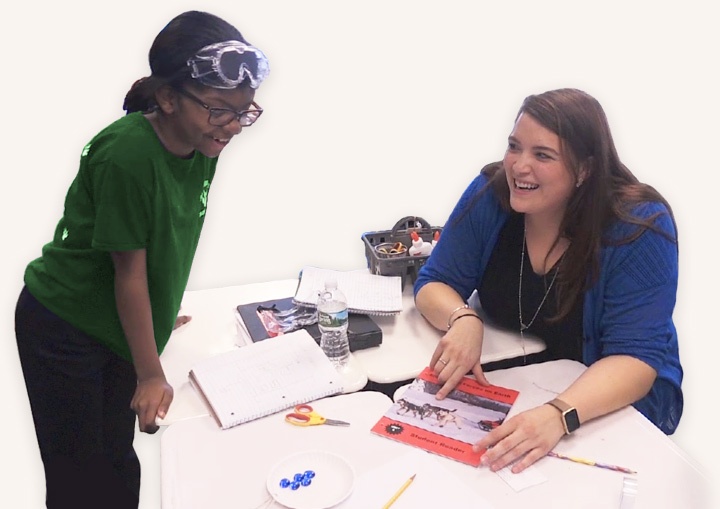
KnowAtom approaches science as the pursuit of new knowledge through hypothesizing, experimentation, and data collection. By design, KnowAtom students look to history to understand that scientific work may yield true, false, or inconclusive results; but, regardless of the yield, each experiment supports the growth of knowledge. Our consistent message to students is that classroom science and engineering is real. Thus, everyone has something to contribute. As lab partners and scientists/engineers, we expect each other to collaborate and compromise respectfully.
us on:
Join Our e-Newsletter